


.webp)
Church Central to Community for Over 140 Years
St. James' Episcopal Church in Fort McKavett is rich in history and entwined with the roots of the city, harkening back to 1868, during a time when the Federal Government mandated all U.S. Army regiments shall supply an ordained chaplain to the troops. At Fort McKavett, a majority of chaplains were Episcopalian. The chaplains welcomed the area ranchers and townsfolk to worship with the officers and soldiers. When the Army deactivated Fort McKavett in 1883, the townsfolk wrote the Bishop of West Texas and requested their own priest. Hence the congregation of St. James' was formed in 1884.
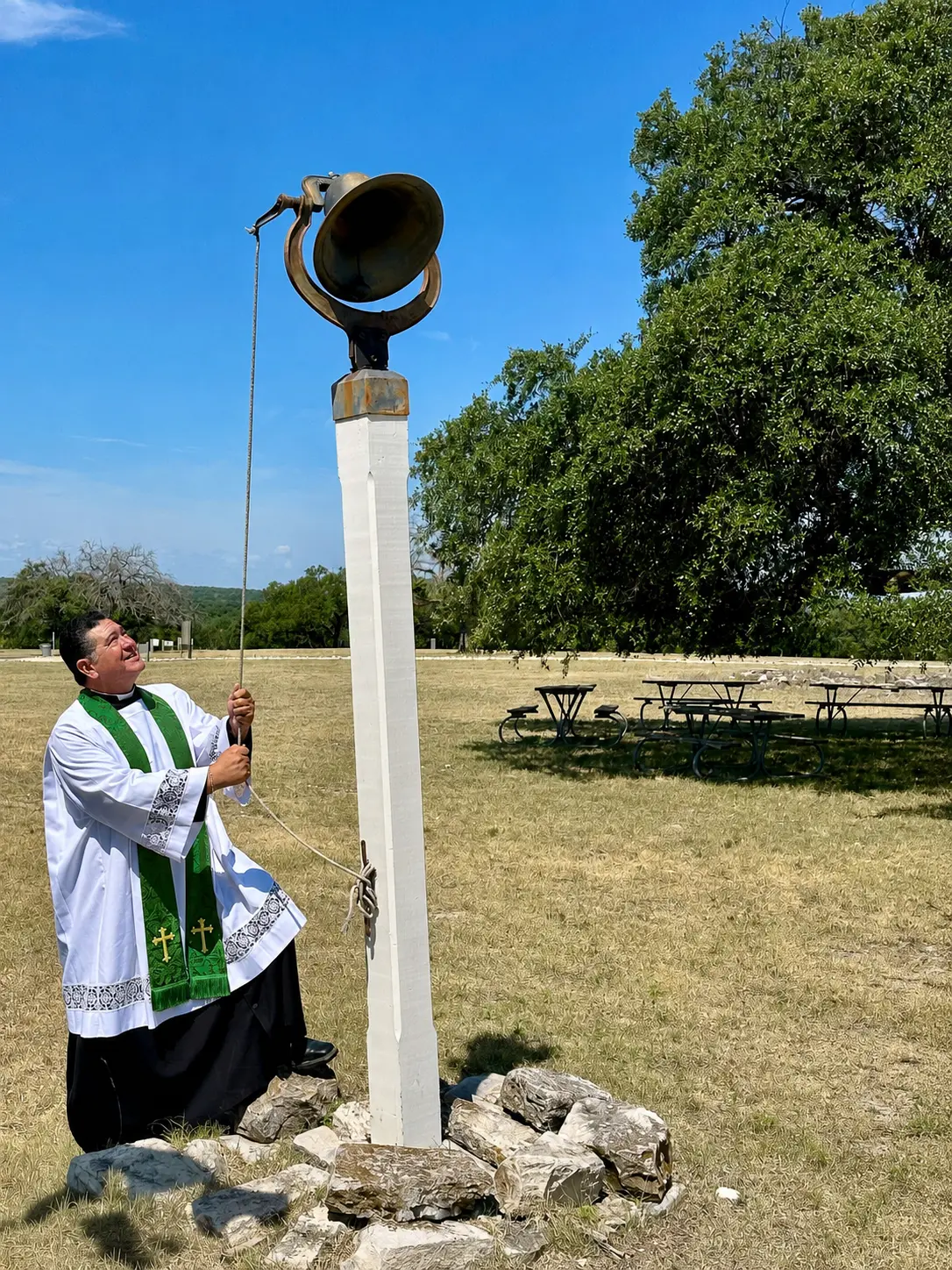
This past July 4th, the Fort McKavett State Historic Site celebrated the town’s history with a “1876 Centennial Celebration.” The Historic Site recreated the fort’s celebration of America’s first one hundred years, relying on archival records of the festivities surrounding the Centennial Celebration held in the town on July 4, 1876. The celebration included foot races, sack races, a greased pole climb, target competitions, brass bands, visiting troops, special foods, and a baseball game. Records show that the garrison troops also held a parade, or “pass in review,” with all the formal military frills. Historically, the regimental chaplain, who was also an Episcopal priest, held a service for the officers and enlisted men. In the old Regular Army of the plains, saturated as it was in routine, this was a festive event.
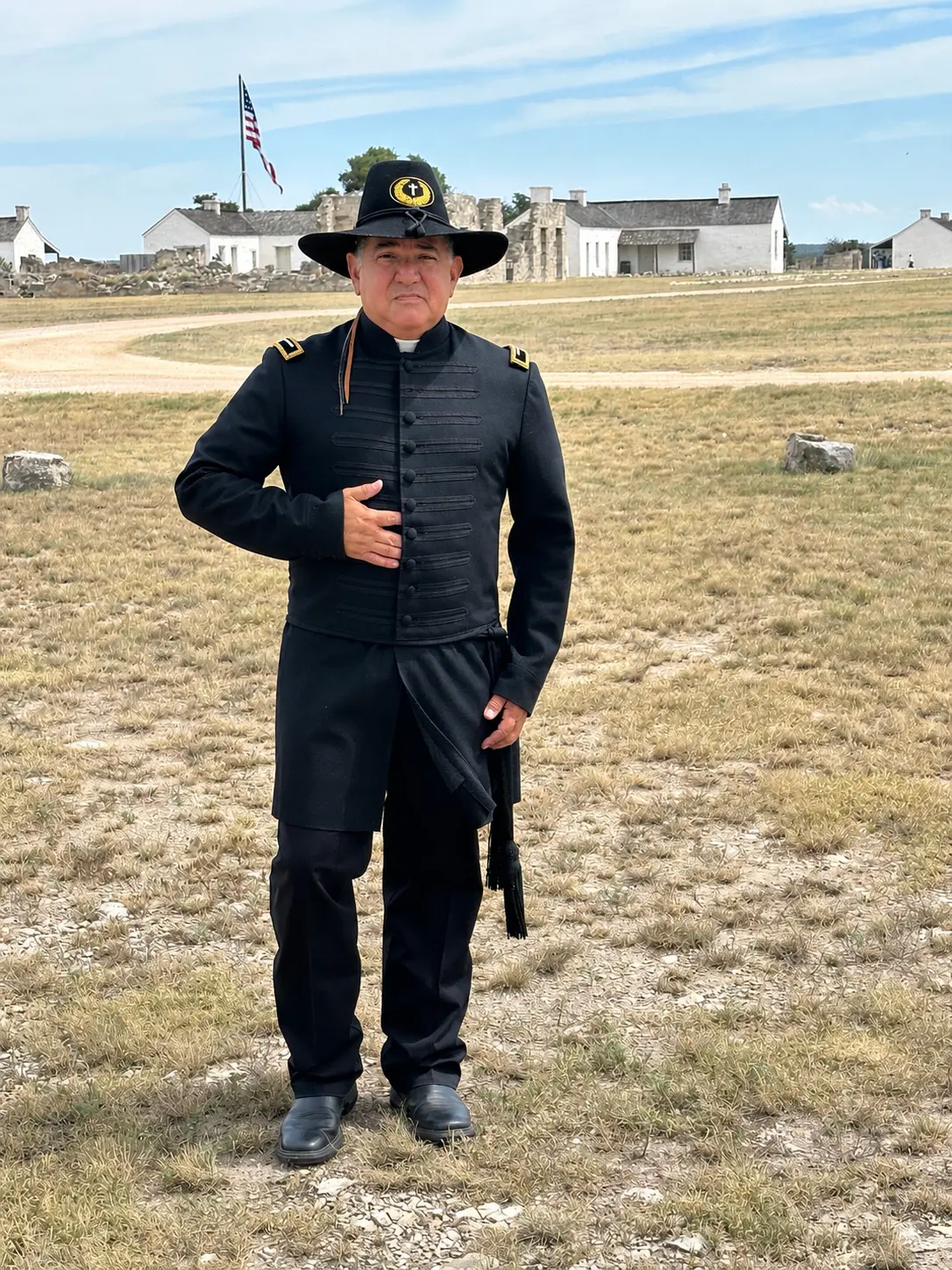
The Rev. Christopher Roque, Rector of St. James Episcopal Church in Ft. McKavett and Calvary Episcopal Church in Menard was asked to participate with a celebration of Holy Communion that was reflective of a service during that time. Rev. Roque built the liturgy from the 1789 Book of Common Prayer, which was in use at the fort in 1876. He researched and constructed a period-accurate sermon based on 19th-century English, tone, rhetoric, and theolog. Addressed in the sermon was the Battle of Little Bighorn which had just occurred on June 25, 1876, The fort had received official word from the War Department about Custer’s massacre only a few days before the 1876 celebration.
This year’s celebration service, held in the post schoolhouse, was well attended. Several uniformed reenactors attended, along with visitors to and staff of the Historic Site, and parishioners from Calvary, St. James, and St. Paul’s in Brady. St. James Episcopal Church was not built until 1884, the year after the Army deactivated the fort as a military installation. Prior to the establishment of St. James, Army chaplains held services in the schoolhouse.
Rev. Roque stated “It was a surreal feeling to worship in the same place, 150 years later, on the same day: July 4.”
.webp)


